Choosing the best understanding management system is no easy feat. The decision carries enormous weight as it details the worker development framework for the following five years. The incorrect selection implies a squandered budget plan, distressed students, and a system no one uses.
But exactly how do you pick the most effective one for you, from a swimming pool of options?
One way to get started is by recognizing the basic blueprints of all LMS kinds.
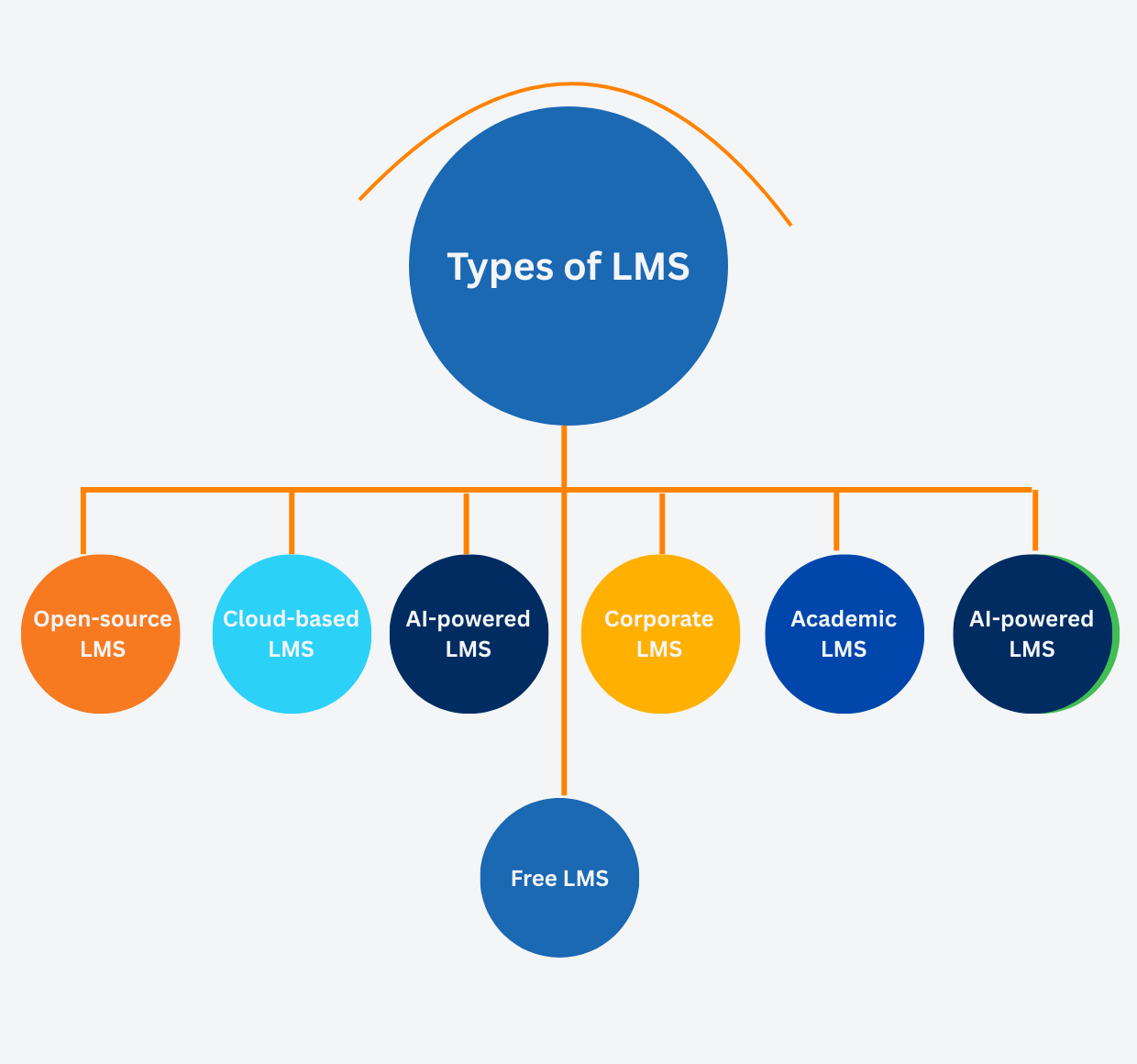
Every type of LMS falls into a couple of distinctive groups based upon how it is developed and who it’s for. The primary sorts of LMS are Cloud-based (SaaS) , Self-hosted (On-premise) , and Open-source From there, systems are further grouped by their designated audience, like platforms for business training, academics, or specialized sectors.
- Open-source LMS
- Cloud-based LMS
- Customized LMS
- Corporate LMS
- Academic LMS
- AI-powered LMS
- Free LMS

Kind # 1: Open-source LMS
Out of all the kinds of LMS, an open-source LMS is much less like a production car engine and more like a high-performance engine on a stand Your company obtains the total resource code, the architectural blueprint for the entire system. Having the complete source code provides your group the power to take down interior wall surfaces, reroute the electrical wiring, and bolt on custom-built parts.
That degree of control, nonetheless, needs a devoted team of expert mechanics. The system’s cost never appears on a supplier’s billing, but it turns up straight on your firm’s pay-roll.
Pros
- Escape vendor roadmaps by constructing features in-house
- Eliminate 5 or six-figure annual subscription charges
- Stay clear of per-user charges as your business scales
- Host all student data in-house to satisfy strict privacy legislations
- Get rid of supplier threat
- Utilize the huge area forums and cost-free plugins
Cons
- Needs full time developers and admins
- Place your business on the hook for all protection patches and data protection
- Withstand complicated version upgrades that take the chance of breaking your personalized work
- Face operational concerns without a supplier’s helpdesk
- Dangers include inadequate UX and low learner fostering
- Increase inner training prices with facility, unfinished admin control panels
Functions
- Built from a core structure of SCORM compliance and program authoring
- Create anything from custom-made leaderboards to special discovering courses
- Customize the entire layout and color pattern for 100 % brand control
- Code direct links to your inner HRIS or CRM
- Serve multiple well-known audiences from a solitary installation
Instances of Open-source LMS
Moodle is the academic requirement, known for its stable performance and a huge collection of community-made plugins.
Open up edX was created by Harvard and MIT for supplying massive, university-style online courses.
Canvas (Self-hosted) is the open-source core of a popular industrial item, giving a powerful starting factor for customized advancement.
Type # 2: Cloud-based LMS
A cloud-based, or SaaS, LMS is like renting a new, totally serviced vehicle. You get the keys and can start driving quickly, while the supplier manages all the upkeep behind the scenes.
Picking this ready-made comfort means paying a clear, predictable registration, normally billed per active user. Expenses commonly vary from $ 5 to $ 12 per user per month, producing a really clear operating expense.
The design is ideal for L&D divisions that require to release online training programs quick without dedicated IT staff to manage a system.
Pros
- Launch a completely useful online learning system in weeks
- Clear and foreseeable LMS prices
- Outsource all technical upkeep, security, and updates to the vendor
- Obtain devoted consumer assistance services
- Calls for no internal programmers or web server administrators to run
- Obtain immediate access to brand-new features the minute they are launched
Disadvantages
- Heavy constraints on customization
- Incur high long-lasting expenses that scale up with every new individual
- Depend totally on the supplier’s item roadmap for brand-new features
- Store your business’s learner information on a third-party server
- Struggle with deep, custom integrations right into proprietary internal software application
Functions
- A brightened, straightforward user interface made for easy fostering
- Built-in analytics dashboards, writing tools, and accreditation courses
- Pre-built ports for preferred software application like Zoom, Salesforce, and Day
- Devoted mobile apps for iOS and Android to sustain learners for mobile knowing
- Frequently has mixed discovering features and features currently built right into the software
Examples of Cloud-based LMS
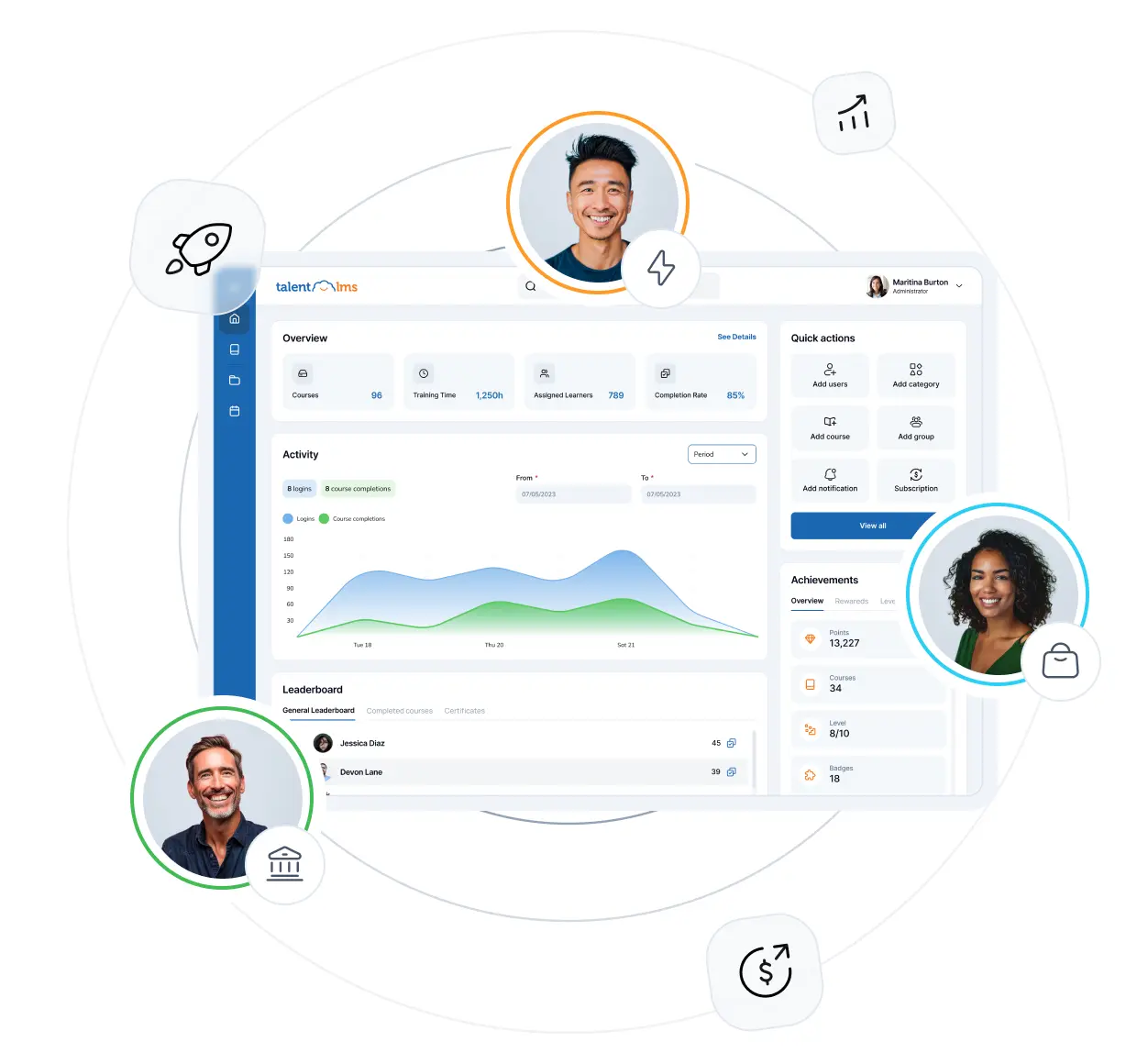
TalentLMS is a prominent choice many thanks to its simpleness, rate of configuration, and complete stock of various other LMS features It’s one of the very best LMS for local business , but likewise works well for medium and scaling organizations.
Adobe Understanding Supervisor is a strong choice for business greatly purchased the Adobe Creative Cloud ecosystem.
Kind # 3: Custom-built LMS
A custom-made LMS resembles appointing a designer to design and build a home from a bare plot of land. It is a bespoke piece of software application, created from scratch by an in-house team to address a service problem that no off-the-shelf product can attend to.
Developing a personalized LMS is the domain of international corporations with highly details workflows , like Amazon or Google. The financial investment isn’t gauged in memberships or incomes, yet in multi-million dollar budgets that cover numerous years.
Pros
- Produces a perfect-fit remedy for your exact process
- Builds a proprietary system that can come to be a competitive advantage
- Enables really infinite range and performance
Disadvantages
- Needs a multi-million dollar, multi-year investment
- Carries a high danger of task failing and spending plan overruns
- Needs a big, long-term group for ongoing advancement
Features
- Every function is custom-coded to address a particular internal requirement
- Contains proprietary devices and process unavailable anywhere else
- Integrates natively with all the firm’s interior systems
Instances of Custom-made LMS
You can’t acquire a custom-built LMS. They’re exclusive inner platforms.
- Google constructs its own understanding systems customized to its enormous engineering society.
- Amazon develops custom business training platforms for its unique satisfaction facility logistics.
Type # 4: Corporate LMS
A business LMS is defined totally by its company objective. It serves as a central piece of a firm’s functional toolkit , engineered particularly to handle, track, and gauge staff member training. Its main work are to automate necessary training for regulations like OSHA or HIPAA, make onboarding much easier for brand-new hires, and assist maintain leaders finding out.
Pros
- Directly sustains and automates key company features
- Consists of durable reporting created to measure business influence
- Incorporates easily with various other corporate software program, like an HRIS
Disadvantages
- Can be rigid and less matched to imaginative, academic, or collective discovering
- Typically focuses on administrative demands over the student experience
- Rates is linked to staff member head count and can come to be costly
Attributes
- Advanced dashboards for conformity training, tracking, and reporting
- Automated courses for accreditation and recertification
- Support for appointing training based upon work functions and hierarchies
Instances of Corporate LMS
Absorb LMS is a strong example made use of for both inner and outside (consumer) training.
iSpring Discover is securely incorporated with its writing tool for fast corporate training course advancement.
Kind # 5: Academic LMS
Step into any type of modern university or institution, and you’ll discover a scholastic LMS at the heart of its procedure. These platforms act as the main electronic campus , a room built around the distinct rhythms of academic life like terms, course magazines, and grade publications. For pupils and instructors, it is a single center for every little thing from downloading and install a curriculum and sending an essay to joining class conversations and inspecting final qualities.
Fun reality: The first sorts of discovering administration systems were purely created for education.
Pros
- Created specifically around the requirements of educational institutions, instructors, and trainees
- Includes durable tools for tasks, grading, and discussion
- Streamlines all training materials and activities in one area
Disadvantages
- Lacks the compliance reporting required for business companies
- Can feel as well stiff for casual or self-directed understanding
- Incorporates with scholastic devices however not service software program
Attributes
- Advanced quality book and assignment submission workflows
- Integrated conversation forums and partnership tools
- Assistance for plagiarism discovery and scholastic criteria
Examples of Academic LMS
- Blackboard Learn is a long-standing business system in college.
- Canvas is a modern-day, prominent system in both K- 12 and colleges for its ease of use.
Kind # 6: AI LMS
AI LMS systems are changing the contemporary LMS software application from a static web content collection into a smart understanding partner.
For students, it’s a individual overview , proactively suggesting training web content and answering inquiries through chatbots to create an on-line discovering experience that feels a lot more like a curated feed. The system observes exactly how they engage with product, determines their skill voids, and comprehends their discovering goals to guide them ahead.
For L&D managers, the AI co-pilot automates the most taxing job It helps create draft tests and training course describes, automatically tags new web content, and analyzes information to expose understandings concerning skill voids throughout the whole organization.
Pros
- Creates a truly customized knowing path for each worker
- Increases interaction by proactively advising appropriate web content
- Automates admin jobs like content tagging and analysis
Cons
- Requires a large, top quality material collection to work properly
- Can be a “black box,” making its suggestion reasoning unclear
- Includes a high-cost costs to a standard LMS subscription
Features
- Presses AI-powered referrals for training courses and material
- Automates the evaluation of skill voids and learning paths
- Deploys chatbots for instantaneous student assistance and answers
Instances of AI LMS
TalentLMS usages AI to power a personal train for learners and a quick program creation device for admins
Docebo is a recognized leader, utilizing AI to assess material and power online knowing programs.
Type # 7: Free LMS
A complimentary LMS is a cloud system with a no-cost rate , entirely various from a self-hosted open-source job. It resembles a totally free examination drive with a small gas tank. LMS vendors utilize these as an advertising on-ramp to their paid items.
It is an ideal fit for a specific trainer, a team running a small pilot task, or a company with fewer than 10 employees.
The compromise for zero expense is a set of hard limits, typically topping you at 10 individuals and 5 training courses. All sophisticated coverage, combinations, and devoted assistance are locked behind the paywall, continuously encouraging an upgrade.
Pros
- Really no monetary cost to begin utilizing it today
- Perfect for running a little pilot project or examining a platform
- A convenient option for very small teams with fundamental needs
Disadvantages
- Drastically restricted by caps on individuals, training courses, and storage space
- Lacks accessibility to coverage, assimilations, and consumer assistance
- The entire experience is created to drive you right into a paid plan
Features
- Simplistic program creation and user monitoring
- Simple tools for developing tests and uploading content
- The most fundamental records on learner development or completions
Examples of Free LMS
TalentLMS provides a well-known free plan for approximately 5 users and 10 courses.
iSpring Learn has a similar cost-free offering created to obtain little groups began.
Knowing Administration System Kind: Frequently Asked Questions
What are the various types of LMS based upon deployment and delivery?
The 3 major release versions are Cloud-based (SaaS), where you rent the software application. Self-hosted (or On-premise), where you get and run the software on your own web servers. And Open-source, where you construct a system from free resource code using your own technical know-how.
What are the crucial differences in between cloud-based, open-source, and on-premise LMSs?
The main difference is that does the job. Cloud-based systems prioritize speed and comfort, with the LMS vendor managing everything for a subscription charge. On-premise and open-source systems prioritize control, changing the work of holding, security, and maintenance to your internal team.
Which LMS types are best matched for company vs. academic settings?
Many business settings choose cloud-based systems developed for the business, as they are rapid to release and concentrated on worker training metrics. Academic establishments normally utilize specialized systems like Canvas or Blackboard, which are designed around terms, quality books, and student assignments.
What implementation model is right for my organization– cloud or on‑premise?
Choose a cloud design if you value speed, predictable costs, and intend to outsource all technological maintenance. Pick on-premise only if you have a huge, devoted IT division and an outright, non-negotiable need to regulate your own data by yourself web servers.
Why would certainly an organization choose an open‑source LMS?
A firm selects open-source for one of two reasons. They either call for a degree of deep, custom-made functionality that no commercial item can match, or they have a solid in-house engineering group and like purchasing those incomes over paying vendor registration costs for complete control.
Are there LMSs developed for specific markets (e.g., medical care or retail)?
Yes, lots of vendors have specialized systems. As an example, a medical care LMS might include verified coverage for governing compliance, while a retail LMS could consist of devices particularly for mobile-first product expertise training.
How do I select the ideal LMS for my usage situation?
Initially, specify your key target market. Is it company or academic? Second, be reasonable concerning your spending plan and internal technical sources to pick a deployment version. Ultimately, always run a small pilot task utilizing a totally free plan or trial prior to devoting to any kind of lasting agreement.
Select the best LMS
After contrasting all the different kinds of an LMS, the decision is not truly regarding the technology. The best discovering management system is the one your workers forget they are making use of. It must feel as smooth and user-friendly as turning on a light switch.
So when you are enduring those last supplier demonstrations, look past the management control panel for a moment. Focus on the learner’s point of view. Then, ask one easy inquiry: “Will this LMS system obstruct of learning, or will it get out of the way?”.
The response to that inquiry will tell you everything you need to understand.